



Article written by Lucy Stokes
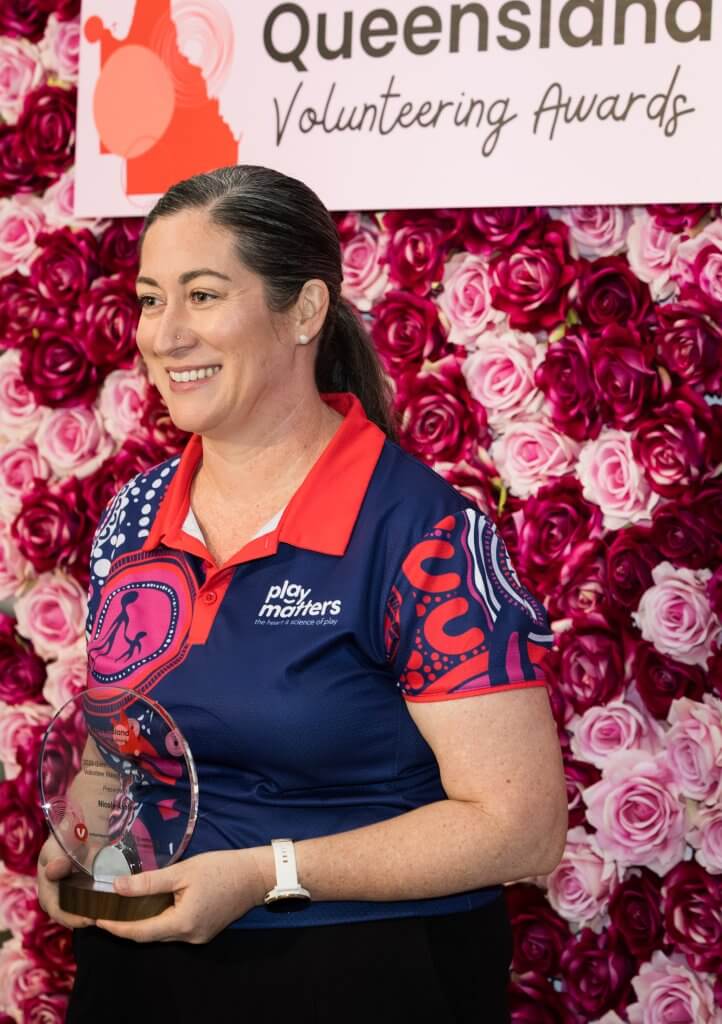
For 50 years, Play Matters Australia has depended on the people who turn up week after week to run its playgroups — parents, grandparents, and community members who simply decided their local group needed someone at the helm. Keeping that volunteer network strong, connected, and genuinely valued now falls to Volunteer Coordinator Nicole Ashley, whose work reshaping the program recently earned her the Queensland Excellence in Volunteer Management Award for 2026.
Long before Nicole Ashley was managing volunteers, she was one. As a child she helped her mum clean the family church once a month, though her dad insists her first real stint as a volunteer came earlier still, aged five or six, clearing green frogs out of the school toilets. There was Girl Guides and Scouts after that, door-knock appeals, Clean Up Australia Days, a gap year spent volunteering around Australia, and a father with decades in the Lions Club.
“It’s all so informal,” Nicole says. “You don’t even realise it’s volunteering until you get older and people start handing you certificates.”
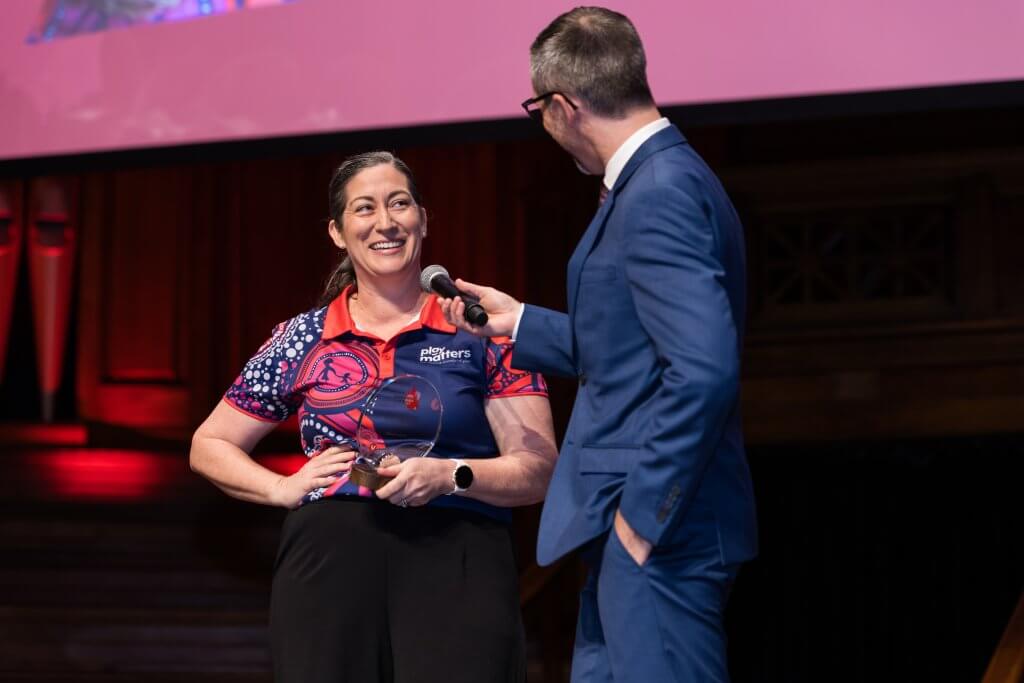
That lifelong, informal apprenticeship in giving is exactly what Nicole brought back to Play Matters Australia, and several years and one award-winning volunteer strategy later, it’s what earned her the 2026 Queensland Excellence in Volunteer Management Award. That same early instinct is what led her to a full overhaul of Play Matter’s volunteer program and shaped what it took to get there.
Nicole holds a background in psychology and counselling and has worked at Play Matters for several years, first as Supported Program Coordinator for the southern half of Queensland, overseeing funded playgroups in at-risk communities. Nicole returned from maternity leave in 2023 having spent the past year immersed in exactly the kind of play, Play Matters exists to support. Offered a choice of roles, she chose volunteer strategy, having spent a lifetime as a volunteer herself, she held a unique perspective.
“It would be interesting to see it from the other side and see how you might be able to fix things for the people in the volunteer space.”
The timing lined up with Play Matters’ 50th anniversary, a milestone that saw the organisation reconnect with some of its founding members, the women who first started running playgroups in their own communities back in 1973. Those conversations surfaced a gap.
“It became really clear that at some point we had stopped really seeking feedback from our volunteers,” Nicole says. “We’d just gotten so busy running in the wheel that we’d forgotten volunteers are actually a core piece of our business.”
So with the endorsement of her senior leadership team, Nicole led the project, interviewing and surveying volunteers and staff across the country, and collecting more than 800 individual data points, which she then worked with a mentor to thematically code.
“Funnily enough, it all lined up so much with the National Standards for Volunteer Involvement — role clarity, recognition, resourcing, all these things.”
The result was a 100-page report, 23 overarching recommendations, and 120 individual tasks. Play Matters’ then-CEO signed off on 110 of them immediately. What began as a three-year rollout grew fast. An external audit added an additional 60 tasks, and a full risk review utilising Not-For-Profit Law’s free online resources added further still.
“But my organisation has been really supportive,” Nicole says. “They were open to it taking as long as it needed, as long as we pulled ourselves up to a really good standard.”
One of the tasks to come out of the review was the Volunteer Steering Group, a space for volunteers to help shape the very changes being made around them.
“I wanted to create a space where volunteers could put their hand up and be part of a working group, because we knew we were going to be making a lot of changes and we wanted it to be volunteer-informed,” Nicole explains.
Rather than roll out changes and risk hearing “this isn’t working” after the fact, the group now gets a say before anything is implemented. Underpinning it all is a principle Nicole is candid the organisation hadn’t always got right: closing the loop.
“Historically it wasn’t clear to volunteers that we’d heard what they’d said and that we’d made changes for them,” she says. “That’s probably been one of the bigger things we’ve done — that we really actively seek volunteer voices, but we also close the loop and show them what’s been fixed.”
Nicole has built a culture of consistency, respect, and genuine appreciation across Play Matters.
“It needs to be a very person-centred approach,” she says. “If we’re trying to do a cookie-cutter approach, with rigid boundaries around what a role is, it takes away people’s ability to use their natural skills, gifts, interests. And that’s why people volunteer in the first place. It’s the golden thread for me. If a person-centred approach is missing, people don’t feel like they’re valued, or that what they have to offer is important. But it is. Every person has something important to offer.”
In practice, that shows up in small, deliberate gestures such as care packages sent to Steering Group members between meetings, simply to keep what Nicole calls “that gratitude momentum” going. It also shows up where she says the work is still not finished.
“I don’t think we do off-boarding very well yet,” she admits. “We were working on compliance first. But I’m looking forward to putting energy into that space — giving people a heartfelt send-off with gratitude, instead of them just dropping off and wondering, do they even care that I did something?”
The scale of what Nicole’s work supports is easy to understate. Play happens each week across more than 400 postcodes in Queensland alone, from the Torres Strait toward the Northern Territory and South Australian borders, and across to Coolangatta. Over 300 volunteers make that possible, each one showing up because they saw a need in their own community and decided to meet it. The culture Nicole set out to build is visible in exactly those volunteers.
“It’s such a team effort,” she says. “There are so many people at our workplace who all contribute to getting things to where they are. I’m just the person who’s lucky enough to be in the role.”
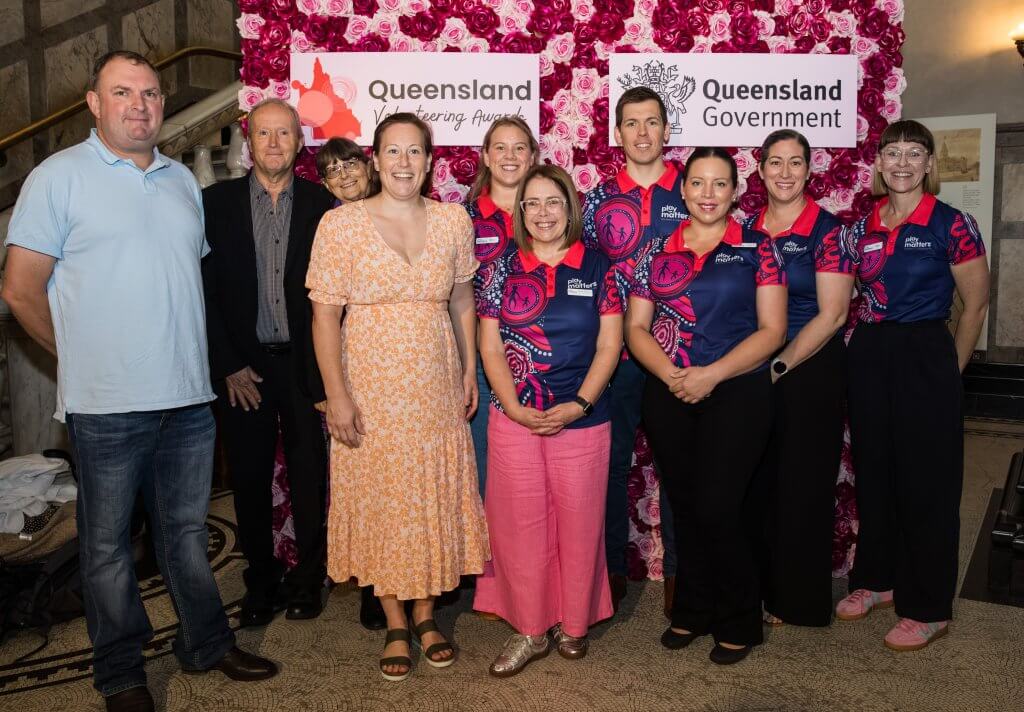
It’s a fitting kind of humility from someone whose entire career has circled back to the same idea she learned as a child pulling frogs out of a toilet block: that showing up for people, quietly and consistently, is the whole job.
Asked what she’d want Play Matters’ community to take from her story, Nicole doesn’t reach for a recruitment pitch. She reaches for something closer to what got her started in the first place.
“If there’s a parent reading this who feels a little disconnected, or isolated, or like they haven’t found their village yet — playgroup is a really great place to do that,” she says. “There are so many playgroups. If one isn’t what you’re looking for, try another. Don’t give up straight away. And if you want to put your hand up and help, many hands make light work.”
There’s no pressure either way, she adds. “If you just want to show up and have a cup of tea while your child plays with some new toys, that’s great too. Don’t sit at home and feel lonely. Go out and meet people.”
Play Matters Australia aims to provide children with the best start to life by empowering parents and carers with the skills and confidence to guide and support their children’s development through the fundamental act of play. Play Matters Australia relies on a national network of over 350 volunteers to run its community playgroups. Find out more about volunteering with Play Matters Australia here.