



Article written by Lucy Stokes
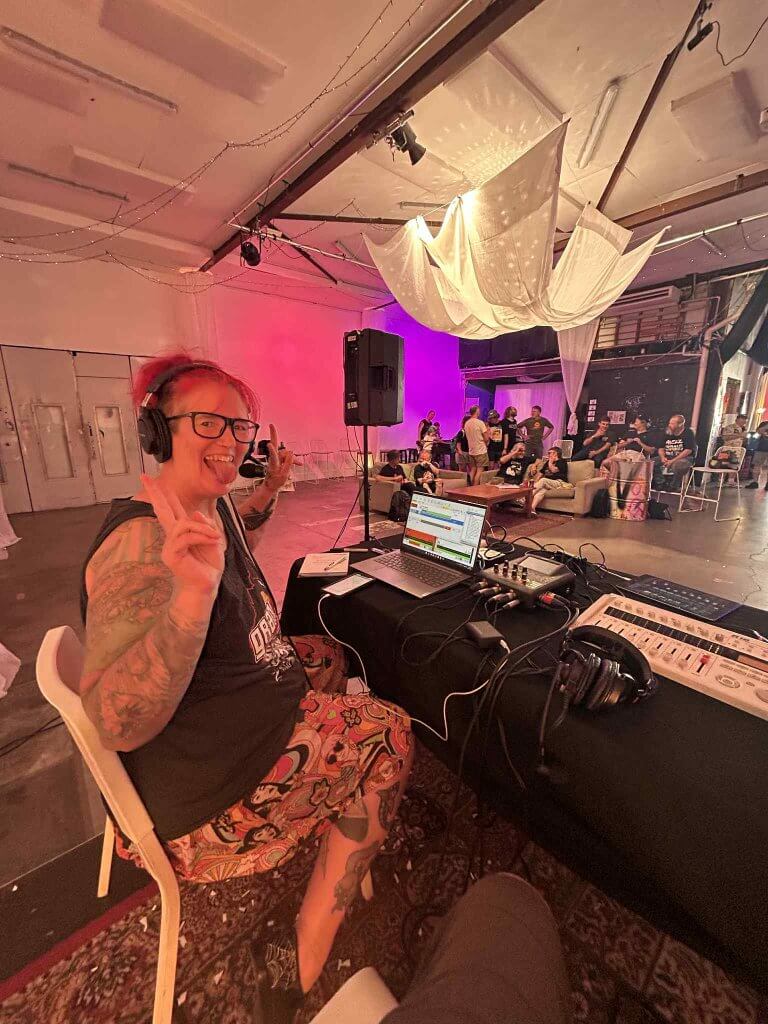
In a world of polished commercial media and algorithm-driven playlists, community radio continues to thrive on something far more powerful: people.
For over fifty years, Brisbane’s iconic community radio station 4ZZZ has broadcast alternative music, independent voices and grassroots stories across South East Queensland. But behind the frequency lies something many listeners never see — a network of passionate, dedicated volunteers who keep the station alive every single day.
From presenters behind the microphone to those organising events, cataloguing music, running training sessions and maintaining equipment, 4ZZZ runs on volunteer energy. With only a small number of staff, almost everything that happens on and off air is carried out by volunteers.
Few people understand that ecosystem better than Associate Professor Heather Anderson, whose decades at the station, and recent book People Powered Radio, trace how 4ZZZ has survived and evolved through its volunteers.
“Without volunteers, the doors don’t open, you wouldn’t have anyone broadcasting on air” Anderson says passionately.
4ZZZ was willing to do what no one else would. Since its founding in 1975, the station has consistently broadcast the voices that mainstream media ignored or actively excluded. It was the first Australian radio station to give First Nations people a platform on air. It also broadcast one of Australia’s first radio shows for gay and lesbian listeners, at a time when being homosexual was still illegal in Queensland. For decades, it has run Locked In, a program dedicated to connecting incarcerated people with the outside world, reading listeners’ letters and keeping people in contact with their families and communities.
These weren’t just broadcasting choices. They were statements about who deserves to be heard.
“Community radio is where identities are represented,” Anderson says. “It’s one of the few places where people can truly represent themselves, where communities that are often filtered out of mainstream media can tell their own stories in their own words.”
That spirit has extended beyond music and well beyond the studio. One story still remembered within 4ZZZ dates back to the early 1990s, a 4ZZZ journalist heard a commotion of the Boggo Road Prison riot from where she was living in Highgate Hill. She grabbed her reel-to-reel recorder and went to the prison walls, shouting questions up to inmates on the roof and recording what came back. She returned to the station, spliced the tape and put it to air, making 4ZZZ the only media outlet to cover the riot at the time.
Community radio, Anderson argues, is often where important ideas take shape before the rest of the world catches up. “This is where a lot of those ideas begin,” she says. “They’re tested here, they find their feet here and then they’re ready for somewhere else.”
Associate Professor Heather Anderson first walked into 4ZZZ in 1991, having just moved to Brisbane.
“I was really passionate about DIY and punk music,” she says. “At the time, I felt like that scene wasn’t being represented, so I wanted to be part of changing that.”
What followed was more than three decades of involvement as an announcer, journalist, board member, and researcher that shaped not just her career but the entire direction of her life. Her book, People Powered Radio: Fifty Years of Australian Community Radio Station 4ZZZ, brings those decades into focus — documenting not just the station’s history, but the volunteer-driven culture that has sustained it. As Anderson writes, 4ZZZ has long functioned as “a movement, a megaphone, and a meeting place” — shaped as much by its volunteers as by its broadcasts. Drawing on interviews and archives, it shows how 4ZZZ has always relied on ordinary people doing extraordinary amounts of unpaid work to keep alternative voices on air.
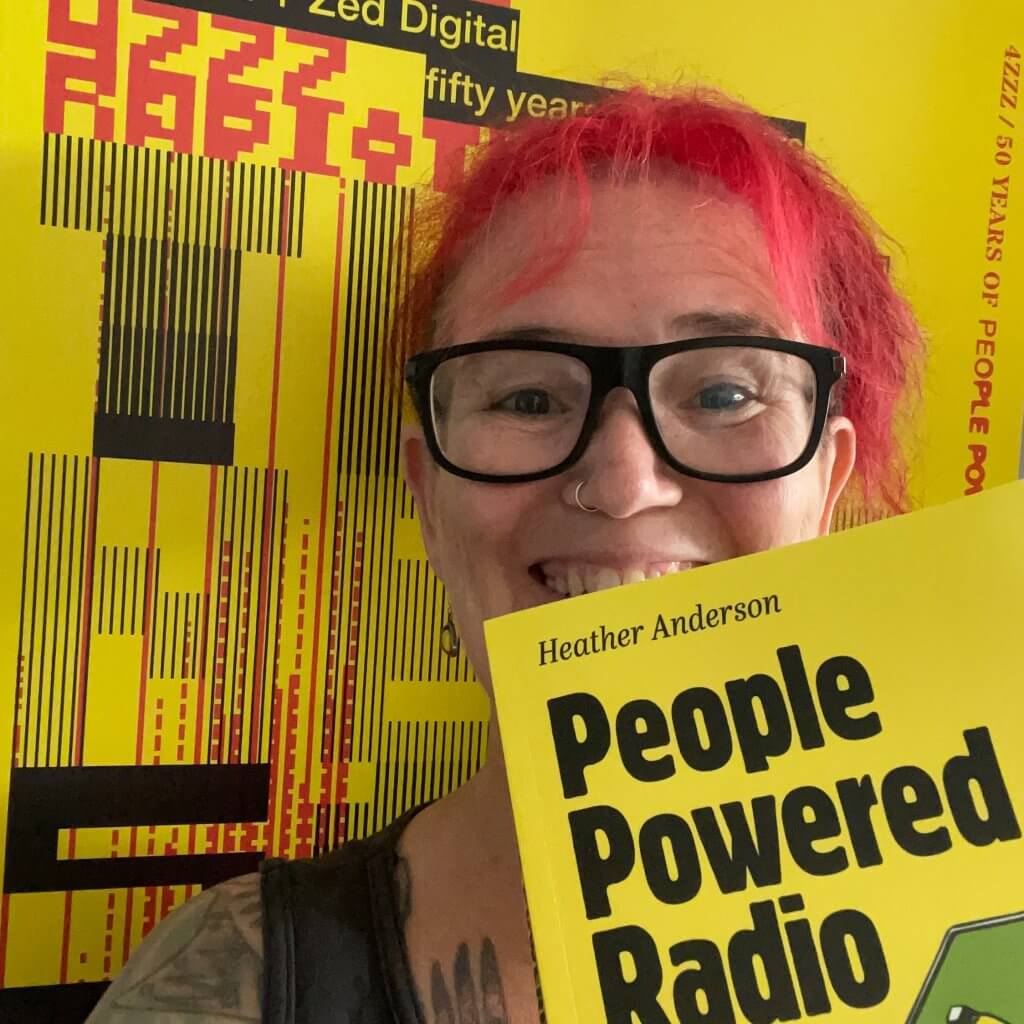
“I cannot comprehend how that trajectory occurred,” she reflects. “It was all because of my time at 4ZZZ. It’s impacted every aspect of my life and career. I wouldn’t have had the career I have if it hadn’t been for this station.”
Her story illustrates something that volunteers at 4ZZZ discover again and again: the experience stretches far beyond whatever you walked in expecting to do. Anderson didn’t just go on air, she ended up running major festivals and market day events, managing everything from alcohol licences to van logistics to the chaos of a live event on the day. She did things that had nothing to do with why she first walked through the door but had the passion to do them regardless.
“One of the great things about volunteering in media is just how many different aspects there are,” she says. “It’s not just presenting, there’s promotions, sponsorship, events, training, so much behind the scenes work that most people never think about. You might join thinking you’ll be a DJ and end up running the station’s biggest event of the year.”
That breadth is something Ben, a volunteer of over fifteen years, knows well. Over his time at 4ZZZ, what strikes him most is how the station draws out skills people didn’t even know they were bringing. Everyone who comes through the door arrives with something: professional expertise, lived experience, a particular passion or a specific talent. The station, he says, has a way of finding a use for all of it. No contribution is too niche, no background too unexpected. What matters is showing up and giving what you can, and what you can give almost always turns out to be more than you thought.
Another volunteer Georgia arrived at 4ZZZ in early 2023 at eighteen years old, convinced she was applying for a music internship. With a background in music throughout school, she had always been drawn to radio, so when the opportunity came up through the station’s Zedlines program, she jumped at it. She sat down for the interview, was asked how she got her news, and realised that this was a news internship, not a music one.
She took it anyway.
By the time it ended, she’d enrolled in journalism as a university minor and had asked the station if she could stay on. Three years later, Georgia hosts ‘From the Roots’ every Thursday from one until three — a folk and country program that has featured a live artist in every single episode since it launched. She curates every playlist, coordinates every interview, manages the show’s social media, and organises the bookings herself. She’s attended CMC Rocks on media accreditation, sitting down with major country artists for interviews she arranged and conducted entirely on her own.
“I love the community,” she says. “I found my people here. There really is a place for everyone, and everyone is welcome to be themselves.”
Within the space of a single afternoon, you might walk past a world music presenter, a first-year journalism student, a veteran broadcaster who’s been doing this since the 1980s, and someone recording their very first segment. Diversity is the point; it’s what makes the station reflect the city it serves.
“I like to think I’ve created an important space,” she says. “Within the folk and country scene in Brisbane, there wasn’t anything like this. That means something to me.”
Her story echoes something Anderson has observed across decades of watching volunteers come through 4ZZZ: the station has a particular gift for meeting people where they are. “It’s a safe space to experiment,” Anderson says. “To try ideas, to explore music and politics, to even fail, and that’s how creativity grows. A lot of ideas that end up being mainstream were given their start here first, by people who just needed somewhere to try.”
At any stage of life, community radio offers a place where your contribution matters. The station’s volunteer base spans generations and backgrounds with students gaining their first experience in media, career changers discovering new directions, retirees finally pursuing something they’d set aside, and long-timers like Anderson who have built entire chapters of their lives here. What they have in common isn’t a skill set or a demographic. It’s the willingness to give what they can.
“Everyone in Brisbane has a story about 4ZZZ,” Volunteer Coordinator at 4ZZZ, Salty, states. “Nothing sounds like this,” says Salty. “You can tune in, not love a song, come back five minutes later and there’s something completely different. It’s wild. But that’s what happens when the people making radio are doing it because they love it.”
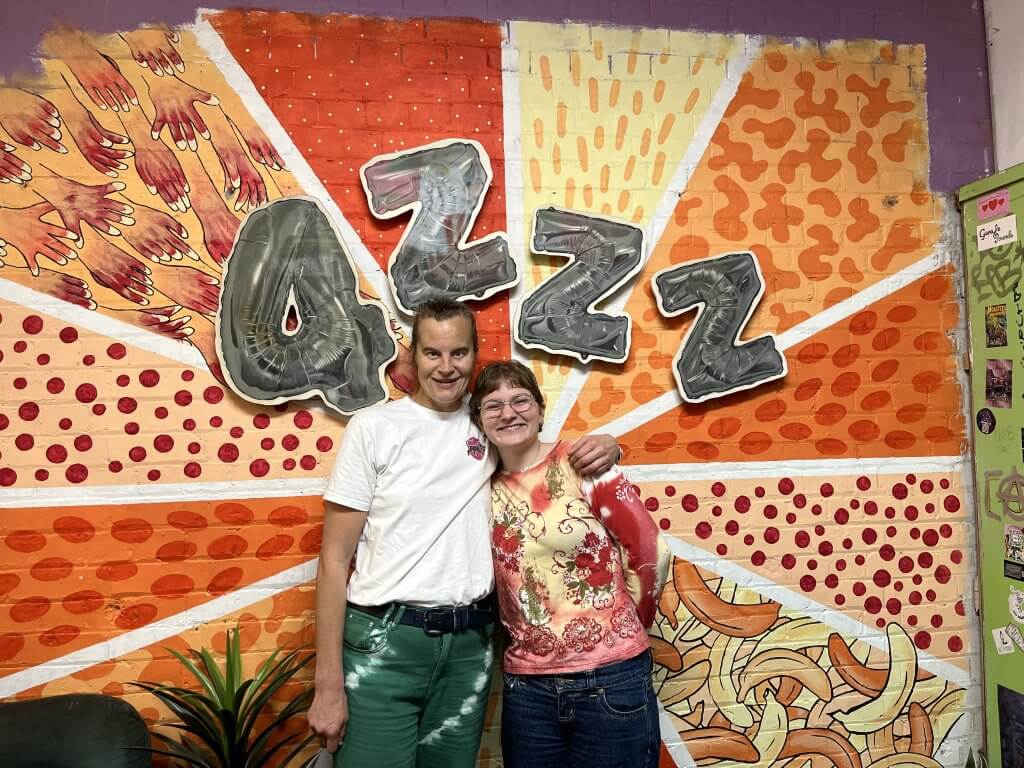
In a media landscape where most voices are curated, commercialised or filtered through algorithms, 4ZZZ offers something increasingly rare: authenticity. The station sounds the way it does because the people making it aren’t doing it for the money but because they believe something should exist that wouldn’t exist without them.
“Community radio is one of the few places where people can truly represent themselves,” Anderson says. “You can walk in, learn how media works, and create something for your own community.”
The volunteers who make that possible come from every corner of Brisbane life. Some are experienced. Some are beginners. Some are chasing a career. Some are finally doing something they should have done years ago. The station, as it has for fifty years, finds use for all of them.
Behind every broadcast, every show, every news bulletin, every letter read aloud to someone in prison is a community of people who simply care to contribute their time, their skills and their ideas. As 4ZZZ moves through its sixth decade on air, one thing remains clear: its future, just like its past, will be powered by volunteers.
Associate Professor Heather Anderson’s book People Powered Radio: Fifty Years of Australian Community Radio Station 4ZZZ is available now.
Interested in volunteering at 4ZZZ? Visit 4zzz.org.au to find out how to get involved.